Retro Beauty
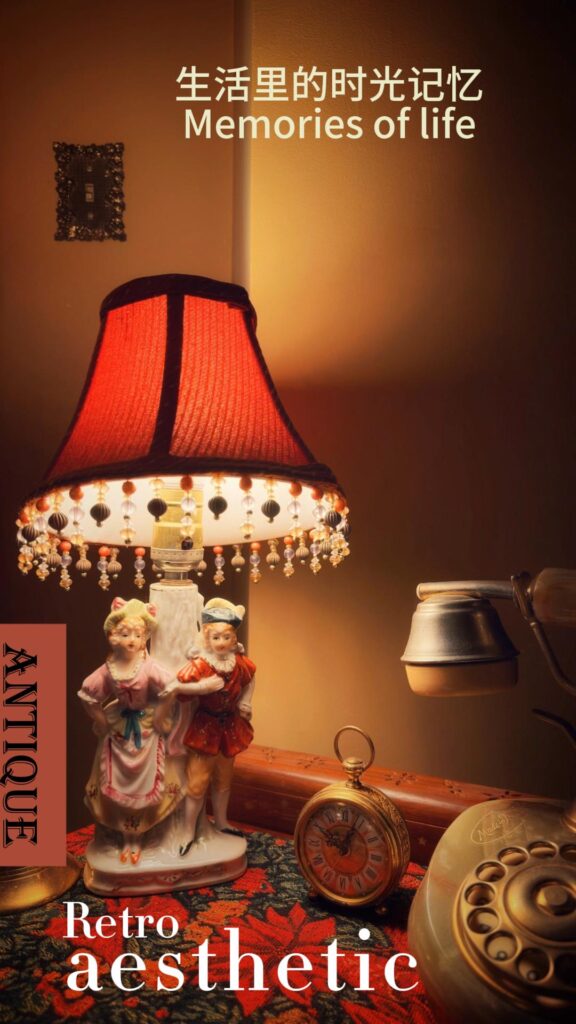
This is a table lamp popular in early 20th-century European and North American middle-class home decor. The porcelain figure on the base is inspired by 18th-century Rococo clothing, while the lamp itself reflects mid-20th-century home decor aesthetics—a fusion of different eras' aesthetics in everyday life. It's commonly found as a bedside lamp, entryway lamp, or side lamp for a coffee table in the living room. It possesses a strong sense of "living classicism" rather than being a piece of palatial art.

The warm yellow light diffused slowly under the lampshade of the old-fashioned table lamp, casting soft shadows on the tassels and porcelain figurines, as if time had been gently slowed down. The beauty of retro style often lies not in grandeur, but in the details: the texture of a lamp, the markings of a pocket watch, the tactile feel polished by time—these are all tangible memories of life.

Classical beauty emphasizes order, proportion, and the warmth of craftsmanship; it derives from the composure cultivated over time. Modern beauty, on the other hand, leans towards efficiency, simplicity, and instant gratification, pursuing "beauty in the moment." The former is timeless, the latter durable; the former invites pause, the latter urges us forward. Therefore, the value of classical beauty in the present is not to replace modernity, but to provide a buffer against the fast pace of life—allowing us to relearn to gaze, wait, and cherish.

In terms of collectability, the difference in cost-effectiveness between vintage table lamps and classic paintings is particularly pronounced. Masterpieces, carrying the weight of art history and rarity, are extremely valuable and have a very high barrier to entry, making them more suitable for institutions or serious collectors. A vintage table lamp, on the other hand, is more affordable yet possesses the same era-defining style, craftsmanship, and practical value. It is both a collectible and an everyday item—the moment it is lit, art blends into life.

Perhaps the true charm of vintage lies in this: it doesn't have to be out of reach, yet it can accompany us for a long time. It brings beauty from the walls of museums back to our tabletops.

Overall, this lamp evokes a sense of warmth, intimacy, and family. An 18th-century garment placed under a 20th-century lamp illuminates people's long-held imagination of an 'elegant life'.
复古的美
这是一款盛行于 20世纪初的欧洲与北美中产家庭装饰风格的台灯。台灯底座的瓷质人物造型取材于 18 世纪欧洲洛可可时期的服饰意象,而灯具本身则属于 20 世纪中叶的家庭装饰美学,是不同时代审美在日常生活中的一次叠合。常见于床头灯、玄关灯、客厅茶几边灯。它具有强烈的“生活化古典”,而非宫廷艺术品。
暖黄色的灯光在旧式台灯的灯罩下缓缓散开,流苏与瓷偶投下柔软的影子,时间仿佛被轻轻放慢。复古之美,往往不在宏大,而在细节:一盏灯的纹理、一只怀表的刻度、一次被岁月磨亮的触感,都是生活里可被触摸的记忆。
古典美强调秩序、比例与手工的温度,它来自长期沉淀后的从容;现代美则更偏向效率、简洁与即时满足,追求“此刻即好看”。前者耐看,后者耐用;前者让人停留,后者催人前行。正因如此,古典美在当下的价值,不是替代现代,而是为快节奏提供一处缓冲——让人重新学会凝视、等待与珍惜。
在收藏层面,复古台灯与古典名画的性价比差异尤为明显。名画承载着艺术史与稀缺性,价值高昂且门槛极高,更适合机构或重度藏家;而一盏复古台灯,价格亲民,却同样拥有时代风格、工艺美感与使用价值。它既是收藏,也是日常——被点亮的瞬间,艺术便融进生活。
或许,复古的真正魅力就在于此:不必遥不可及,却能长久相伴。它让美,从博物馆的墙上,走回到我们的桌边。
总体感觉,这台灯的整体气质:温暖、亲密、家庭感。18 世纪的衣裳,被安放在 20 世纪的灯下,照亮的是人们对‘优雅生活’的长期想象。